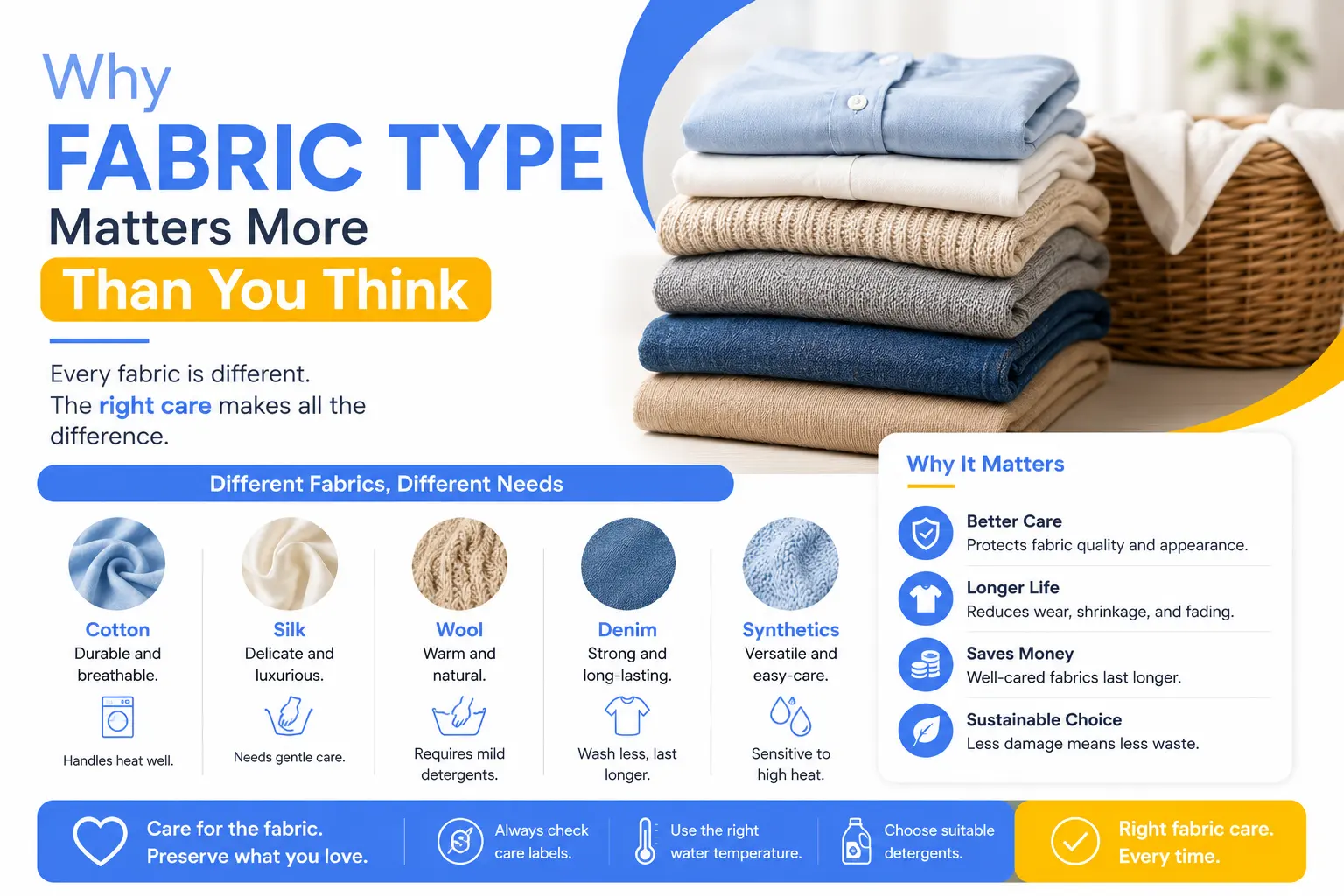




Clothing is an important part of daily life, but not all fabrics are made equal. You may notice that some items in your wardrobe seem to last for years, while others wear out after only a few washes. Understanding why this occurs can assist you care for your garments better and make effective purchasing decisions.
The lifespan of clothing depends on various factors, including fibre type, weave, construction, usage patterns, and care methods. By knowing which fabrics are more prone to wear and how to handle them, you can extend their life without adding extra effort to your routine.
This blog explores the reasons some fabrics degrade faster than others and provides practical advice for preserving your clothing.
Understanding Fabric Composition and Wear
Natural Fibres vs Synthetic Fibres
Fabrics are generally made from either natural fibres or synthetic fibres, each with distinct properties that influence durability.
Natural Fibres:
Cotton, wool, silk, and linen are examples of natural fibres. They are breathable, comfortable, and often luxurious, but they can be more susceptible to shrinkage, pilling, and wear over time. For instance, cotton fibres weaken with frequent washing, especially in hot water. Wool and silk require delicate handling due to their sensitive structure.
Synthetic Fibres:
Polyester, nylon, and acrylic are examples of synthetic fibres. They are generally more resistant to wear, stretching, and shrinking. However, they can be prone to static, pilling, or developing a “worn” appearance if subjected to friction over time.
How Fibre Strength Affects Longevity
The strength of the fibre itself is a key factor in how quickly a fabric wears out. Some natural fibres like cotton are softer and shorter, meaning they break down faster under repeated washing and friction. Synthetic fibres such as nylon are longer and more resilient, allowing them to withstand stress for longer periods.
Weave and Fabric Construction Matter
The way a fabric is knitted or woven directly impacts its durability. Tightly woven fabrics are more resistant and stronger to wear, while loosely woven fabrics can distort or fray more easily.
Twill Weave: Found in denim and chino fabrics, twill weave creates a diagonal pattern that adds durability and hides minor stains or marks, making garments last longer.
Plain Weave: Common in shirts and bed linens, plain weave is simple but less resistant to friction, making it more prone to pilling over time.
Knits: Knitted fabrics, such as jersey and sweaters, are flexible and comfortable but stretch easily. Repeated wear and washing can cause them to lose shape or develop holes faster than woven fabrics.
Factors That Accelerate Fabric Wear
Friction and Movement
Friction is one of the main causes of fabric degradation. Areas that experience frequent rubbing, such as under the arms, along the sides of trousers, or at collars and cuffs, show wear more swiftly. Even gentle friction during drying or washing can weaken fibres over time.
Exposure to Heat and Sunlight
Extreme and high temperatures, whether from drying, washing, or ironing, can weaken fibres. Heat can distort, shrink, or even burn delicate fabrics such as silk and wool. Direct sunlight may also fade colours, particularly in vibrant natural fibres.
Chemical Exposure
Detergents, bleach, and fabric softeners can contribute to fibre wear. Excessive detergent leaves residues, while harsh chemicals break down fibres more rapidly. This is why careful measurement and selection of cleaning products is essential for prolonging fabric life.
Frequency of Use and Washing
Even the most durable fabrics degrade faster when they are worn and washed excessively. Frequent washing accelerates friction, heat exposure, and chemical interaction, making garments lose their strength and appearance earlier than expected.
How Different Fabrics Respond to Wear
Cotton
Cotton is soft, breathable, and comfortable, but it is also prone to shrinking and thinning with repeated washing. High temperatures, harsh detergents, and over-drying can cause fibres to weaken, leading to holes or pilling.
Wool
Wool is warm and naturally resilient, but it is sensitive to heat, friction, and agitation. Washing in hot water or machine-drying can cause shrinkage, felting, and loss of softness. Proper care involves gentle handwashing or professional dry cleaning.
Silk
Silk is delicate, luxurious, and prone to tearing. Its fibres can weaken with water, detergents, and friction. Exposure to sunlight can fade colours, and high heat can damage the texture. Professional cleaning is often recommended.
Linen
Linen is breathable and strong, but the fibres are coarse and can wear unevenly. Linen wrinkles easily, and repeated washing without care can lead to fraying. Washing at low temperatures and air drying can help preserve its structure.
Polyester and Nylon
Synthetic fibres like polyester and nylon are more resistant to heat, shrinking, and pilling. However, they are not immune to friction or chemical damage. Over time, synthetics can develop a worn surface if frequently rubbed or improperly cleaned.
Tips for Extending Fabric Life
Adjust Your Washing Habits
- Wash only when necessary to reduce fibre stress.
- Use lower temperature settings (around 30°C for most clothing).
- Choose gentle cycles for delicate fabrics.
- Avoid overloading the washing machine to minimise friction.
Dry Clothes Carefully
- Air dry when possible, avoiding direct sunlight for coloured garments.
- Use low heat if tumble drying is necessary.
- Hang or lay flat according to fabric type to prevent stretching or distortion.
Store Clothes Properly
- Avoid overcrowded wardrobes.
- Hang structured garments on appropriate hangers.
- Fold knitwear and delicate fabrics to preserve shape.
- Store seasonal clothing in breathable covers to protect from dust and moisture.
Deal with Stains Promptly
- Treat stains immediately to prevent fibre damage.
- Blot stains rather than rubbing to avoid spreading.
- Use cold water or gentle cleaners for most fabrics.
- Avoid harsh chemicals that can degrade fibres.
Rotate and Rest Your Wardrobe
- Wearing the same items repeatedly accelerates wear.
- Rotate clothing to distribute stress evenly across garments.
- Allow fabrics to “rest” between wears to preserve elasticity and structure.
Follow Care Labels
- Read and follow care labels for washing, drying, and ironing instructions.
- Care labels are standardised under ISO, ensuring consistent guidance for each fabric type.
- Ignoring labels often results in avoidable damage.
When Professional Care Is Beneficial
Some fabrics require professional cleaning to maintain their quality. Delicate items such as silk blouses, wool suits, and formal wear benefit from expertise that home washing cannot provide. Professional laundry services use fabric-specific treatments to clean effectively while protecting fibres.
For London residents, Snow White Laundry & Dry Cleaning London offers expert handling for all types of garments. With collection, cleaning, and delivery services, they ensure your clothes are cared for according to their fibre requirements without any extra effort on your part.
Conclusion
The reason some fabrics wear out faster than others comes down to a combination of fibre type, weave, usage, and care methods. Natural fibres like cotton, wool, and silk are soft and comfortable but require careful handling. Synthetics like polyester and nylon are more durable but can still show wear if treated improperly.
By adjusting washing habits, storage, drying methods, and stain treatment, you can enhance the life of all fabrics without adding extra effort. The care labels mentioned below, and considering professional cleaning for delicate items, further improve durability.
For London residents seeking a practical solution, Snow White Laundry & Dry Cleaning London provides expert care for all fabric types. Their professional services, including collection and delivery, ensure your garments remain in top condition, helping you get the most from your wardrobe while saving time and effort.
Frequently Asked Questions
Why do some fabrics wear out faster in the UK climate?
Frequent exposure to damp and fluctuating temperatures can weaken fibres. Air drying indoors and careful storage can help prevent damage.
How can I make delicate fabrics like silk and wool last longer?
Use gentle washing methods, avoid high heat, follow care labels, and consider professional cleaning for delicate items.
Are synthetic fabrics always more durable than natural ones?
Synthetics resist shrinking and stretching better, but all fabrics degrade over time if exposed to friction, heat, and chemicals.
How should I treat stains on delicate fabrics?
Treat stains immediately using gentle blotting techniques and cold water. Avoid harsh chemicals that may weaken fibres.
When is professional laundry necessary in London?
Professional cleaning is ideal for delicate fabrics, formal wear, and garments requiring specialised stain removal. It ensures long-term fabric integrity without extra effort.