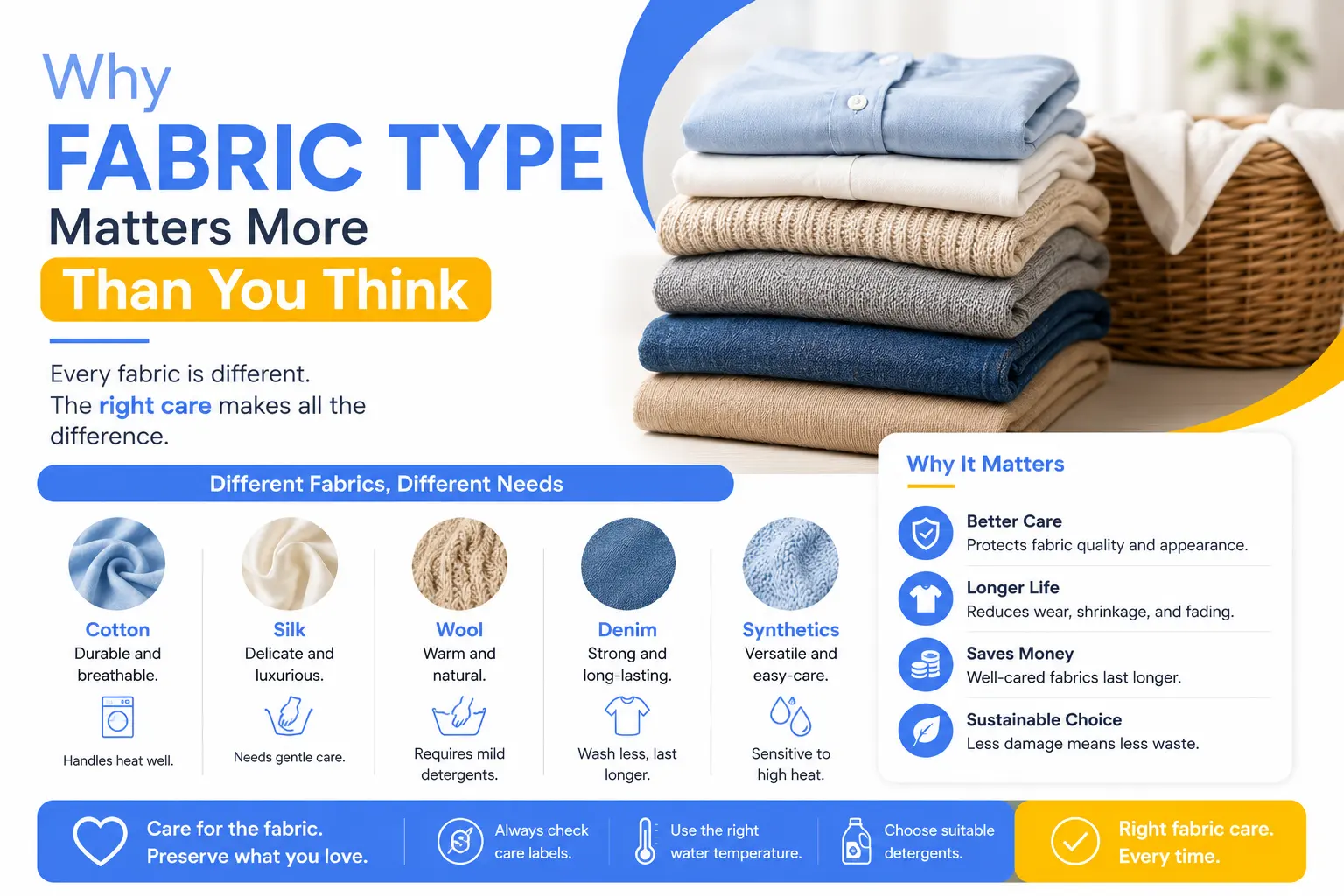




Clothing is a regular part of everyday life, yet many garments lose their quality far sooner than they should. In most cases, this is not due to poor manufacturing but rather to everyday care habits that gradually weaken fabric fibres. Frequent washing, high drying temperatures, and improper storage all contribute to wear and tear over time.
The good news is that extending the life of your clothes does not require extra effort. It simply involves making small, informed adjustments to your existing routine. By understanding how fabrics respond to different conditions and treatments, you can preserve their appearance, maintain their structure, and reduce the need for frequent replacements.
This blog provides clear and practical steps based on recognised fabric care principles that help you to maintain your wardrobe efficiently.
Why Do Clothes Wear Out So Quickly
Clothing deterioration is rarely immediate. Rather, it occurs gradually as fibres are exposed to repeated stress. Every wash cycle introduces water saturation, friction, and detergent interaction. With passing time, such factors weaken the structure of the fabric, which leads to visible signs such as thinning, fading, and loss of shape.
Heat is another major contributor. High temperatures, whether during washing or drying, can cause fibres to shrink or become brittle. This is particularly noticeable in natural fabrics such as cotton and wool, as well as synthetic blends that lose elasticity under heat.
According to WRAP, extending the active life of clothing is one of the most effective ways to reduce environmental impact. This highlights the importance of maintaining garments properly rather than replacing them prematurely.
Seven Steps to Make Your Steps Last Longer Without Extra Effort
-
Wash Less, but More Effectively
One of the most effective ways to extend the lifespan of your clothes is to reduce how often they are washed. While hygiene is important, not all garments require cleaning after a single use. Items such as jeans, coats, and knitwear can often be worn multiple times, especially if they are aired properly between uses.
Overwashing is a common but avoidable mistake. Each unnecessary wash exposes fabrics to mechanical stress and chemical interaction, both of which contribute to long-term damage. The Energy Saving Trust also advises that reducing washing frequency helps conserve energy while protecting clothing fibres.
When minor marks or odours appear, it is often sufficient to clean only the affected area. Spot cleaning allows you to maintain freshness without subjecting the entire garment to a full wash cycle. This approach is both efficient and effective, particularly for lightly worn items.
-
Use the Right Washing Settings
When washing is necessary, the method used plays a significant role in preserving fabric quality. High temperatures are rarely required for everyday clothing and can accelerate wear over time. Guidance from the NHS confirms that lower temperature washes are suitable for most garments, as modern detergents are designed to perform effectively without excessive heat.
Choosing the correct wash cycle is equally important. Delicate fabrics benefit from gentler cycles that reduce agitation, while heavier items such as towels or bedding should be washed separately to avoid unnecessary friction. Overloading the washing machine should also be avoided, as it prevents proper movement and increases stress on fabrics.
Detergent use is another key factor. Using too much detergent can leave residue within fibres, causing stiffness and gradual deterioration. Following recommended quantities ensures that clothes are cleaned effectively without being overexposed to chemicals. Selecting detergents suited to specific fabric types further supports long-term garment care.
-
Dry Clothes with Care
Drying is often one of the most overlooked aspects of clothing care, yet it has a significant impact on how long garments last. Tumble dryers offer convenience, but frequent use exposes fabrics to high heat, which weakens fibres and reduces elasticity over time. This can lead to shrinkage, distortion, and a shorter lifespan for many items.
Air drying provides a more controlled alternative. Allowing clothes to dry naturally helps maintain their structure and reduces the risk of heat-related damage. However, even this method requires some consideration. Direct sunlight can cause colours to fade, while hanging heavy garments incorrectly may lead to stretching.
Placing clothes in a well-ventilated area and adjusting drying methods based on fabric type can make a noticeable difference. These changes do not require additional effort but simply involve making more suitable choices after washing.
-
Store Clothes Properly to Maintain Their Shape
Clothing can lose its shape even when it is not being worn. Storage conditions play an important role in maintaining garment quality. Overcrowded wardrobes create constant pressure and friction, which can lead to wrinkles, stretching, and distortion.
Allowing space between garments helps them retain their natural structure. Structured items such as jackets and shirts benefit from proper hangers, while knitwear should be folded to prevent stretching. Seasonal clothing should be stored in breathable covers to protect against dust while allowing airflow.
These adjustments are simple but effective. By improving how clothes are stored, you can prevent unnecessary damage and maintain their appearance over time.
-
Deal with Stains Early and Gently
Stains are one of the most common reasons garments are discarded. However, in many cases, the damage occurs not because of the stain itself but because it is left untreated for too long. Acting quickly increases the likelihood of successful removal and reduces the need for repeated washing.
Gentle methods are usually the most effective. Blotting the stain rather than rubbing it prevents spreading, while cold water is suitable for most situations. Harsh chemicals should be used cautiously, as frequent use can weaken fibres.
By addressing stains promptly, you minimise the impact on the fabric and maintain the overall quality of the garment.
-
Rotate Your Wardrobe Naturally
Wearing the same items repeatedly can accelerate wear, particularly in areas that experience frequent movement, such as collars, cuffs, and seams. Rotating your wardrobe allows fabrics time to recover between uses, helping them maintain their elasticity and structure.
This approach does not require additional planning. Simply varying what you wear can distribute wear more evenly across your clothing. Over time, this helps extend the lifespan of each garment without any extra effort.
-
Follow Care Labels for Consistent Results
Care labels provide essential instructions tailored to each garment. These guidelines are standardised under ISO, ensuring consistency across different fabrics and manufacturers.
Ignoring care labels can lead to avoidable issues such as shrinkage, colour fading, or distortion. While it may seem convenient to treat all clothes the same way, this often results in long-term damage. Taking a moment to follow these instructions ensures that each garment is cared for appropriately.
When Professional Care Is the Better Option
While most clothing can be maintained at home, certain garments require specialised care. Delicate fabrics, formal wear, and structured items often benefit from professional cleaning methods that preserve their quality and extend their lifespan.
Professional services use techniques designed to clean effectively while protecting fabric integrity. For those based in London, Snow White Laundry & Dry Cleaning London offers a practical solution. With convenient collection, expert cleaning, and timely delivery, garments can be properly cared for without disrupting your routine.
Incorporating professional cleaning such as snow white, ensures that valuable or delicate items remain in excellent condition, complementing your everyday care practices.
A Practical Approach to Long-Term Clothing Care
Maintaining clothing does not need to be time-consuming or complicated. Small changes, such as washing less frequently, using appropriate settings, drying carefully, and storing garments properly, can have a lasting impact.
These practices are supported by trusted organisations and industry standards, ensuring that they are both reliable and effective. Over time, they help reduce unnecessary spending, improve garment longevity, and support more sustainable habits.
Conclusion
Making your clothes last longer is not about adding more tasks to your day. It is about making better decisions within your existing routine. By understanding how fabrics respond to washing, drying, and storage, you can take simple steps that preserve their quality.
These methods are easy to apply, require no additional effort, and deliver long-term benefits. When combined with occasional professional care, they provide a complete and practical approach to maintaining your wardrobe. Ultimately, a more thoughtful approach to clothing care leads to better results, both for your garments and for your overall lifestyle.
Frequently Asked Questions
How can I make my clothes last longer without extra effort in the UK?
You can extend clothing life by reducing overwashing, using lower temperature washes (around 30°C), and avoiding excessive heat when drying. These methods are effective and suitable for UK households.
Is washing at 30 degrees enough to clean clothes?
Yes, modern detergents are designed to work effectively at lower temperatures which makes 30°C suitable for most everyday clothing while protecting fabric quality.
What is the best way to dry clothes in the UK climate?
Air drying indoors in a well-ventilated space is the most effective method. Proper airflow helps prevent dampness while maintaining fabric integrity.
When should I use a professional laundry or dry cleaning service in London?
Professional services are recommended for delicate fabrics, formal garments, and items that require specialised stain removal or fabric care.
What is the biggest mistake that damages clothes over time?
The most common mistake is overwashing combined with high heat during washing and drying, which weakens fibres and reduces garment lifespan.