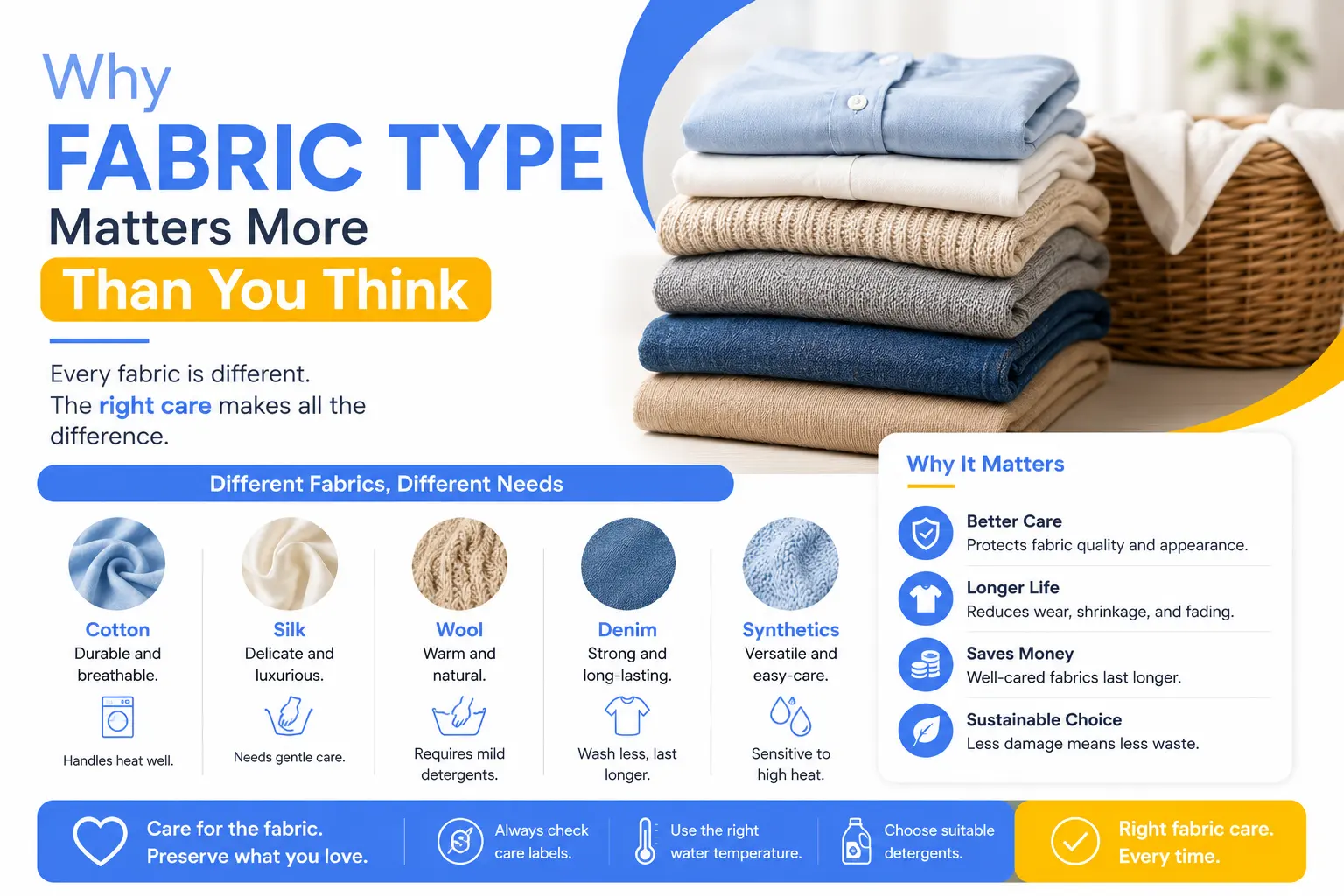



Most of us have been there. You pull a favourite shirt out of the wash and it’s a size smaller, a shade duller, or worst of all permanently misshapen. You followed the instructions. You didn’t overheat it. And yet.
The frustrating truth is that washing instructions alone don’t tell the whole story. The care label tells you the minimum. What it doesn’t tell you is why and without understanding the why, you’re making educated guesses every single time you do a load of laundry.
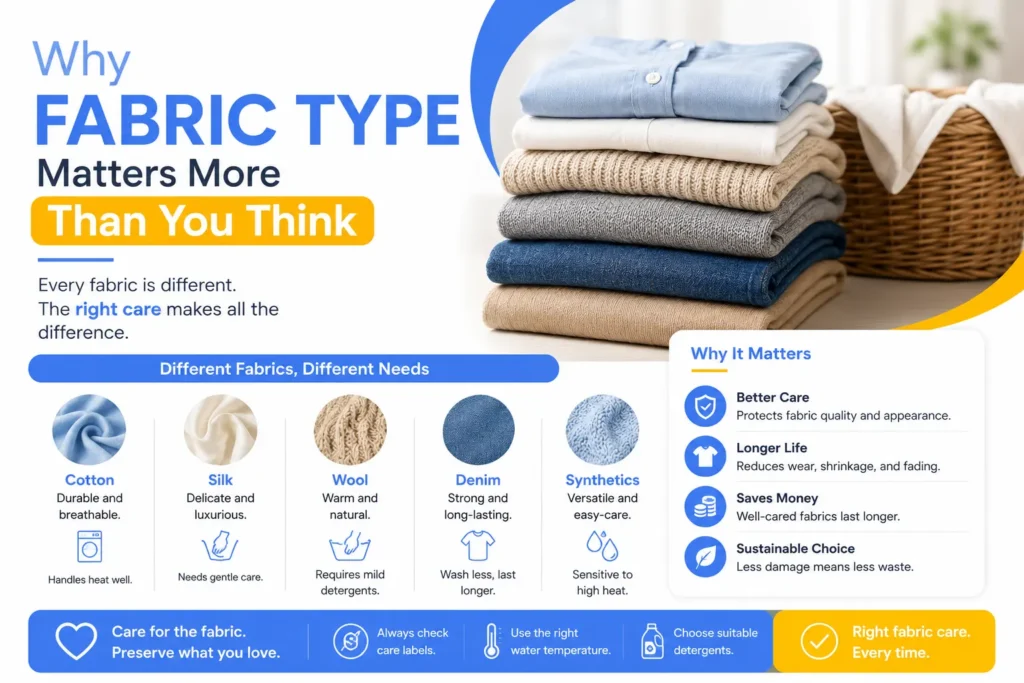
Fabric type is the single most important variable in garment care. It determines how your clothes respond to water, heat, agitation, detergent, and drying. Get it right, and your clothes last years longer and look better doing it. Get it wrong, and you’re replacing your wardrobe far sooner and spending a lot more money than you should be.
This guide covers the fabrics you encounter most often, how they behave, what damages them, and when professional care is the genuinely smarter choice.
The Basics: How Fabrics Are Structured
Before we get into specific fibres, it helps to understand what you’re actually dealing with when you wash a garment.
Every fabric is made from fibres either natural (grown or produced by animals or plants) or synthetic (manufactured from chemical compounds). Those fibres are spun into yarns and woven or knitted into fabric. The fibre type determines the fabric’s core characteristics: how it reacts to water, how much heat it can tolerate, how it responds to friction, and whether it holds its shape under stress.
Natural fibres tend to absorb water readily, which makes them comfortable to wear but more vulnerable to shrinkage, stretching, and colour fade when washed aggressively. Synthetic fibres are generally more stable in water but sensitive to heat, and they have their own set of quirks (pilling, static, retaining odours).
Most modern garments are also blended a combination of two or more fibres to get the best qualities of each. Blends add another layer of complexity, because each fibre in the blend needs to be treated according to its most delicate component.
Natural Fibres: The High-Reward, High-Risk Category
Cotton
Cotton is the world’s most widely used natural fibre, and for good reason. It’s breathable, durable, comfortable, and relatively easy to care for. But “relatively” is doing a lot of work in that sentence.
The main risk with cotton is shrinkage. Raw cotton fibres are naturally crimped. When woven into fabric, they’re held under tension. Heat especially the combination of hot water and a hot tumble dryer relaxes that tension and allows the fibres to contract. A cotton T-shirt washed and dried on a high heat can shrink by 5–10% in a single cycle.
Colour fade is the other major issue. Hot water, harsh detergents, and direct sunlight all cause cotton dyes to break down. Dark cottons in particular lose their depth quickly when washed at 40°C or above.
Best care approach: Wash at 30°C unless heavily soiled. Turn dark items inside out. Remove from the dryer slightly damp and allow to air finish. Iron while still slightly damp for a crisp result.
When to go professional: Tailored cotton shirts, structured cotton jackets, and embroidered cottons benefit from professional laundering — the controlled pressing and finishing that a professional service provides is difficult to replicate at home.
Linen
Linen is made from the flax plant and is one of the oldest textiles in human history. It’s exceptionally breathable, gets softer with wear, and has a natural texture that reads as effortlessly elegant. It’s also famously temperamental in the wash.
Linen’s primary vulnerability is irreversible wrinkling and shrinkage. The fibres are quite rigid and don’t stretch back easily once distorted. Machine washing on anything above a gentle cycle can cause pronounced and difficult-to-remove creasing. It also shrinks — sometimes significantly — if washed in warm water and tumble dried.
Linen can also distort at the seams if the spin speed is too high, particularly on structured pieces like linen blazers, trousers, and dresses.
Best care approach: Hand wash or use a delicate machine cycle at 30°C or below. Lay flat or hang to dry away from direct sunlight. Iron on high heat while still damp linen actually needs heat to smooth out properly.
When to go professional: Structured linen garments, linen suits, and embellished linen pieces should always be professionally dry cleaned. The pressing alone which requires professional equipment and skill to do without creating sheen marks is worth it.
Wool
Wool is warm, naturally moisture-wicking, and resilient but it’s also the fabric most likely to be irreversibly ruined by a single careless wash.
The culprit is felting. Wool fibres are covered in microscopic scales. When exposed to hot water, agitation, and temperature changes, those scales lock together permanently a process called felting. The result is a garment that’s dense, stiff, significantly smaller, and completely unwearable. This can happen in a matter of minutes.
Moths are the other major threat to wool but that’s a storage issue rather than a washing one.
Best care approach: Hand wash in cool water with a specialist wool detergent. Gently squeeze (never wring or twist). Lay flat to dry in its original shape hanging a wet wool garment will cause it to stretch under its own weight. Never tumble dry wool unless the label explicitly permits it.
When to go professional: Wool suits, wool coats, tailored wool trousers, and fine merino knitwear should be professionally dry cleaned. The risk of home washing going wrong even once is too high when the garment has real value.
The dry cleaning process uses chemical solvents rather than water, which means wool fibres are never at risk of felting. It’s not just a premium option for wool — for structured or high-value pieces, it’s genuinely the only reliable method.
Explore Snow White’s dry cleaning service for wool & tailored garments →
Silk
Silk is produced by silkworms and is one of the most luxurious natural fibres available. It’s lightweight, naturally temperature-regulating, and has a luminous quality that no synthetic can quite replicate. It’s also among the most delicate fabrics in everyday wear.
Silk is vulnerable to almost everything: water (which can leave tide marks and distort the weave), heat (which weakens and yellows the fibre), agitation (which causes snags and pulls), sunlight (which fades and degrades it), and many common detergents (which strip its natural sheen).
Perspiration is a particular enemy of silk. The proteins in sweat interact with silk fibres and, over time, cause permanent degradation and discolouration particularly under the arms.
Best care approach: Some silk garments labelled “washable silk” can be hand washed very gently in cool water with a silk-specific detergent. Handle minimally, never wring, and roll in a towel to remove excess water before laying flat to dry. Avoid direct sunlight.
When to go professional: Most silk blouses, silk dresses, and any structured silk garment should be professionally dry cleaned. If in doubt and with silk, doubt is the right default bring it in.
⚠️ A word of caution: Many customers bring us silk items that have been attempted at home. Tide marks, distorted weave, and loss of lustre are common results. Some of these can be treated professionally; some cannot. The cost of a professional clean is almost always less than replacing the garment.
Cashmere
Cashmere comes from the undercoat of cashmere goats and is prized for its extraordinary softness and warmth-to-weight ratio. It’s also among the most expensive fibres in everyday wear and among the most easily ruined.
Like wool, cashmere is vulnerable to heat and agitation. But because the fibres are finer, the margin for error is even smaller. Cashmere also pills more readily than wool — particularly in areas of friction like underarms and cuffs and once pilled excessively, there’s no reversal.
Best care approach: Hand wash in cool water with a specialist cashmere detergent, or use your machine’s most delicate cycle in a mesh laundry bag. Lay flat to dry. Store folded (never hung, which stretches the shoulders), with cedar blocks to deter moths.
When to go professional: For cashmere coats, structured cashmere pieces, or anything particularly valuable, professional dry cleaning is the right call every time.
Synthetic Fibres: More Robust, But Not Foolproof
Polyester
Polyester is the backbone of fast fashion and performance sportswear alike. It’s strong, wrinkle-resistant, quick-drying, and holds colour well. It’s also widely misunderstood.
Polyester’s main vulnerabilities are heat and odour retention. High heat even from a tumble dryer on a high setting can cause polyester fibres to melt slightly, permanently damaging the fabric’s hand feel and appearance. This is particularly true of finer polyester weaves used in blouses and dresses.
Polyester also tends to retain body odour more than natural fibres, because it’s hydrophobic (it repels water) which also means sweat doesn’t wash out as easily as it does from cotton.
Best care approach: Wash at 30–40°C. Tumble dry on a low setting or air dry. Avoid fabric softener it coats synthetic fibres and reduces breathability further.
Nylon
Nylon is strong, lightweight, and elastic commonly found in hosiery, activewear, swimwear, and outerwear linings. It’s generally easy to care for but has a few specific sensitivities.
Nylon is damaged by UV light prolonged exposure causes yellowing and weakening of the fibres. It’s also sensitive to high heat and will melt or distort at dryer temperatures above low.
Best care approach: Wash on a gentle cycle at 30°C. Air dry away from direct sunlight. Never tumble dry on high heat.
Viscose / Rayon
Viscose (also called rayon) occupies an interesting middle ground: it’s a semi-synthetic fibre made from natural cellulose (usually wood pulp) but processed with chemicals. It drapes beautifully, feels soft, and is often used to mimic the appearance of silk or cotton at a lower price point.
It is also, genuinely, one of the most difficult fabrics to care for at home.
Viscose shrinks dramatically in water — often by 20–30% — and distorts easily. It loses significant strength when wet, which means agitation in the washing machine can cause it to stretch, tear, or lose its shape entirely. It also wrinkles badly and is easily marked by water.
The care labels on viscose garments frequently say “dry clean only” for good reason. Many people ignore this, assume it’s a conservative recommendation, and ruin the garment in one wash.
Best care approach: If the label says dry clean only follow it. Some “washable viscose” garments can be hand washed very gently in cool water, but this is only if the label explicitly permits it. Lay flat to dry.
When to go professional: If it says dry clean only, it means dry clean only. This isn’t the manufacturer being cautious it’s a genuine material constraint.
Elastane / Spandex / Lycra
Elastane (sold under brand names like Spandex and Lycra) is rarely a standalone fabric it’s blended into other materials, typically at 2–10%, to provide stretch and recovery. You’ll find it in everything from jeans to sportswear to swimwear.
Elastane’s enemy is heat. High temperatures break down the elastic fibres, causing permanent loss of stretch. This is why leggings go baggy, waistbands stop snapping back, and swimwear loses its shape usually from a dryer that’s too hot.
Best care approach: Wash at 30°C or below. Air dry or tumble dry on the lowest setting. Never iron directly on elastane.
Fabric Blends: The Most Misunderstood Category
A “cotton-polyester blend” sounds simple. In practice, it means you have a garment that contains both a natural fibre (vulnerable to heat shrinkage) and a synthetic fibre (vulnerable to heat melting). The correct care approach is determined by whichever fibre is most sensitive which is usually the natural one.
Common blends and their care considerations:
Cotton-polyester (e.g. 60% cotton / 40% polyester): Treat as cotton. Low temperature wash, low heat drying. The polyester reduces shrinkage somewhat, but high heat can still cause issues.
Wool-nylon (common in socks and knitwear): Treat as wool. Cool water, gentle wash, flat dry.
Silk-elastane (common in fitted dresses and blouses): Treat as silk. Dry clean unless the label explicitly states washable.
Viscose-polyester: Treat as viscose. Dry clean or hand wash with extreme care.
The rule of thumb: always treat a blend according to its most delicate component.
The Real Cost of Getting It Wrong
It’s easy to underestimate how much incorrect fabric care costs over time. Let’s put some perspective on it.
A quality wool suit in the UK costs anywhere from £300 to well over £1,000. A single incorrect home wash hot water, agitation, tumble drying can render it completely unwearable. The cost of a professional dry clean is typically £15–£30. The maths isn’t complicated.
The same logic applies to cashmere jumpers (£80–£400+), silk blouses (£60–£200+), and linen blazers. These aren’t just garments they’re investments, and they respond well to being treated as such.
Even at the more affordable end of the wardrobe, the accumulated cost of replacing items that have shrunk, faded, or lost their shape adds up faster than most people realise. Proper fabric care including professional care for the pieces that warrant it consistently costs less than the alternative.
When to Wash at Home vs. When to Go Professional
Here’s a straightforward guide, though always defer to the care label on your specific garment.
Wash at home (following care instructions carefully):
- Everyday cotton T-shirts, underwear, casual wear
- Synthetic activewear and sportswear
- Cotton bed linen and towels
- Polyester blouses and dresses on a gentle cycle
Consider professional laundering:
- Tailored cotton shirts (professional pressing makes a significant difference)
- Structured cotton jackets and blazers
- Heavily soiled or stained items where home treatment risks setting the stain
- Items with delicate embellishments, beading, or embroidery
Always dry clean:
- Wool suits, wool coats, structured wool garments
- Cashmere coats and high-value knitwear
- Silk dresses, blouses, and scarves (unless explicitly labelled washable)
- Viscose / rayon garments labelled dry clean only
- Leather and suede
- Heavily embellished or structured formal wear
- Vintage clothing (always check with a professional before attempting anything)
How Snow White Laundry & Dry Cleaning Approaches Fabric Care
Every garment that comes into Snow White is assessed individually before any treatment begins. We look at the fabric composition, the care label, the construction of the garment (lining, interfacing, embellishments), and the nature of any staining or soiling. Only then do we determine the appropriate method.
We use professional dry cleaning solvents for the garments that require them, and our wet cleaning process for those that benefit from water-based treatment. Our pressing and finishing process is carried out by experienced staff not automated because getting a tailored jacket or a delicate silk blouse right requires judgement, not just equipment.
We work with a range of fabrics daily: wool suits and cashmere coats, silk wedding dresses, vintage pieces, structured linen, technical outerwear, leather accessories, and everything in between. If you’re uncertain about a garment whether it’s a care label you can’t read, a fabric you’re unsure about, or a stain you don’t want to risk treating yourself bring it in or get in touch. Honest advice costs nothing.
View Snow White’s full range of dry cleaning & laundry services → Get a quote or book a collection →
Frequently Asked Questions
Can I wash “dry clean only” items at home if I’m careful? Sometimes, for certain fabrics but it depends entirely on the specific garment and fibre. Some delicate items are labelled “dry clean only” because the construction (interfacing, lining, structure) doesn’t survive water, even if the outer fabric technically could. Others, like certain viscose pieces, will shrink or distort regardless of how careful you are. If the garment has genuine value to you, the risk isn’t worth taking.
What’s the difference between dry cleaning and professional laundering? Dry cleaning uses chemical solvents (not water) to dissolve and remove soil and stains from fabric. It’s the right method for water-sensitive fabrics like wool, silk, and structured tailoring. Professional laundering uses water, but at controlled temperatures with specialist detergents, professional extraction, and expert finishing. Many shirts and household items are better suited to professional laundering than dry cleaning.
Why do my clothes shrink even when I wash on a cool setting? Shrinkage isn’t caused by water temperature alone agitation and the mechanical action of the drum play a significant role, particularly with natural fibres like cotton and linen. Even a 30°C wash on a full spin cycle can cause some shrinkage in a 100% cotton garment. Using a gentle/delicate cycle and allowing items to air dry significantly reduces the risk.
My wool jumper has shrunk. Is there any way to fix it? Sometimes, partially. Wool felting is generally irreversible, but if the garment has shrunk without fully felting, you may be able to reshape it by soaking in cool water with a small amount of hair conditioner (which relaxes the fibres), gently stretching back to shape, and laying flat to dry. This works better on knitwear than woven wool. Results vary and there’s no guarantee.
How often should I dry clean a suit? For a suit worn 2–3 times per week, once or twice per season is typically sufficient. Over-dry-cleaning can cause its own wear on fibres. Between cleans, use a clothes brush after each wear to remove surface dust, hang on a proper suit hanger to maintain shape, and allow it to air between wearings. Spot clean minor marks before they set.
Does dry cleaning remove all stains? Not always. Some stains particularly old, set-in stains, or those that have been treated with home products are more difficult to remove. Tannin-based stains (wine, tea, coffee), oil-based stains, and ink all respond differently to treatment. The best outcomes always come from bringing a stained garment to a professional as soon as possible, before the stain has time to oxidise and bond with the fibre.