



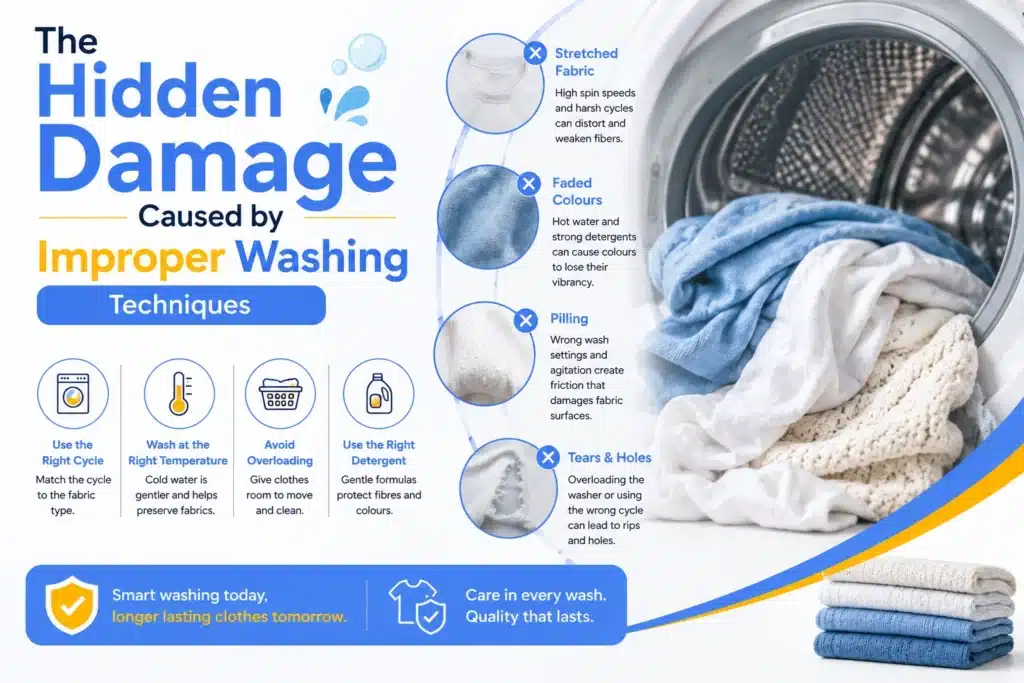
Most people treat their washing machine like a magic box. Clothes go in dirty, come out clean. But what if the very habits you trust are quietly destroying your favourite pieces?
At Snow White Laundry and Dry Cleaning, we see the aftermath every single day. Garments that should have lasted years arrive with irreversible damage, shrunken wool coats, faded silk blouses, pilled cashmere sweaters, and jeans that have lost their shape entirely. The sad truth? The majority of this damage happens in home washing machines, not from wear and tear.
Understanding how improper washing techniques silently degrade your clothes can save you hundreds of pounds and keep your wardrobe looking its best.
Why Your Washing Habits Matter More Than You Think
Clothing fibres are more fragile than they appear. Natural fabrics like cotton, wool, and silk have specific structural needs. Synthetic blends react differently to heat, friction, and chemical exposure. When you ignore these differences, you are not just risking a one-off mishap, you are accelerating the aging process of every garment you own.
Research published by the University of Portsmouth found that a single load of laundry can release over 700,000 microscopic fibres into the water system. More importantly for your wardrobe, mechanical agitation during washing causes significant fibre breakage, leading to pilling, thinning, and eventual holes in fabrics. The study, led by Rd. Richard Blackburn, demonstrated that gentler washing cycles dramatically reduce this fibre loss and extend garment lifespan.
What this means practically: the harder your washing machine beats your clothes, the faster they fall apart. Let’s discuss the most common washing mistakes and their real impact:
The Most Common Washing Mistakes and Their Real Impact
1. Using Water That Is Too Hot
Hot water feels like it should clean better. And yes, it does dissolve oils and kill bacteria more effectively. But it also comes at a steep cost to your fabrics.
Cotton fibres can shrink by up to 5% when exposed to temperatures above 60°C. Wool fibres, which are essentially protein-based scales, will felt and shrink irreversibly in hot water because the scales open up and lock together. Synthetic fabrics like polyester and nylon can warp or develop permanent creases.
The American Cleaning Institute recommends washing most everyday items at 30°C to 40°C. Delicate items and dark colours should go even lower, around 20°C to 30°C. Hot water should be reserved for heavily soiled items, bed linens, and towels and even then, 60°C is usually sufficient.
What to do instead: Check your care labels. If it says 30°C, trust it. Modern detergents are formulated to perform excellently at lower temperatures.
2. Overloading the Machine
It is tempting to cram one more towel into the drum. But overloading is one of the worst things you can do for your clothes.
When a washing machine is too full, clothes cannot move freely. They rub against each other with excessive friction, causing pilling, colour transfer, and fibre abrasion. The detergent also cannot distribute evenly, meaning some items get too much soap residue while others do not get cleaned properly.
A properly loaded machine should have enough space that you can fit your hand vertically between the top of the drum and the laundry. If you cannot, remove items.
What to do instead: Split large loads into two smaller ones. Your clothes will come out cleaner, less wrinkled, and far less damaged over time.
3. Ignoring Fabric-Specific Care Requirements
Not all fabrics are created equal, and treating them as if they are being a fast track to ruin.
Wool and cashmere need cold water, gentle cycles, and flat drying. Heat and agitation cause felting, that stiff, shrunken texture that cannot be reversed. The Woolmark Company, the global authority on wool care, emphasizes that wool garments should be washed inside out on a wool-specific cycle or hand-washed gently.
Silk is a protein fibre that weakens when wet. It loses strength by up to 20% when saturated, making it vulnerable to tearing and abrasion in a washing machine. Professional dry cleaning or very gentle hand washing is the safest approach.
Denim might seem indestructible, but improper washing causes indigo dye loss, stiffness, and shape distortion. Turning jeans inside out, washing in cold water, and air drying preserves the colour and fit.
Down-filled jackets and comforters require special detergents and low-heat drying with dryer balls to restore loft. Regular detergent strips the natural oils from down feathers, and high heat can melt the shell fabric or scorch the filling.
What to do instead: Sort by fabric type, not just by colour. Delicate, woollens, silks, and technical fabrics each need their own approach.
4. Using Too Much Detergent
More soap does not equal cleaner clothes. In fact, excess detergent leaves a residue on fabrics that attracts dirt, dulls colours, and can irritate skin.
High-efficiency washing machines use significantly less water than older models. If you pour in a full cap of standard detergent, you are likely using two to three times the necessary amount. The leftover soap builds up in fibres, making fabrics feel stiff and look grey over time.
What to do instead: Use the amount specified on the detergent packaging for your load size and machine type. For high-efficiency machines, this is usually a tablespoon or two of liquid detergent per load. Consider using less for lightly soiled items.
5. Skipping the Sorting Step
Sorting laundry feels like an old-fashioned chore, but it exists for good reason.
Mixing heavy items like jeans with lightweight fabrics like blouses creates uneven mechanical stress. The heavy items bang against the lighter ones, causing tears, stretched seams, and pilling. Dark and bright colours can bleed onto lighter garments, especially in warm water.
Zippers, buttons, and hooks act like tiny weapons in the drum, snagging and tearing delicate fabrics.
What to do instead: Sort by weight, colour, and fabric type. Wash jeans with jeans, towels with towels, and delicate in mesh bags. Fasten zippers and buttons, and turn garments inside out to protect the outer surface.
6. Aggressive Machine Drying
The tumble dryer is convenient but brutal on fabrics. High heat breaks down elastic fibres, causes shrinkage, and sets wrinkles permanently.
Elastic waistbands, spandex blends, and fitted garments are particularly vulnerable. Repeated high-heat drying causes the elastic polymers to degrade, leading to saggy underwear, stretched-out leggings, and misshapen t-shirts.
The Consumer Product Safety Commission and fabric care experts consistently recommend air drying whenever possible. When machine drying is necessary, use the lowest heat setting and remove items while slightly damp to finish air drying.
What to do instead: Air dry on a rack or line for most items. Use the dryer sparingly, and never on wool, silk, or spandex-heavy garments.
The Long-Term Cost of Bad Washing Habits
Let us put this in practical terms. A quality wool sweater costs between £80 and £200. A silk blouse, £60 to £150. A well-made pair of jeans, £80 to £120. If improper washing ruins just three garments a year, you are throwing away £300 to £500 annually.
Multiply that over five years, and the cost climbs to £1,500 or more. That does not include the environmental cost of replacing clothes prematurely, the water, energy, and resources required to manufacture new garments, or the textile waste heading to landfill.
The Economic Observatory reports that the fashion industry is responsible for 10% of global carbon emissions and massive water pollution. Extending the life of your existing clothes by just nine months reduces their carbon, water, and waste footprints by 20% to 30%. Proper washing is one of the simplest ways to contribute to that reduction.
When to Call a Professional
Some garments simply should not go in a home washing machine, no matter how careful you are.
- Designer pieces with complex construction or embellishments
- Wedding dresses and formal wear with delicate fabrics and intricate details
- Leather and suede items that require specialized cleaning solvents
- Antique or heirloom textiles that need conservation-level care
- Down-filled coats and comforters that need proper loft restoration
Items with stubborn stains like oil, wine, or ink that require professional spotting techniques
At Snow White Laundry and Dry Cleaning, we have spent over 15 years handling London’s most challenging garment care needs. Our team understands fibre science, stain chemistry, and fabric construction at a level that home washing cannot replicate. We use professional-grade equipment, specialized solvents, and techniques refined through thousands of successful cleanings.
Free collection and delivery across London means you do not even need to leave your home. We collect your items, clean them with expert care, and return them fresh, usually within 24 hours.
A Simple Checklist for Better Home Washing
If you are washing at home, keep these principles in mind:
- Read the care label — it is there for a reason
- Wash cold for colours, delicates, and everyday items
- Do not overload the machine
- Use the right amount of detergent
- Sort properly by colour, weight, and fabric type
- Protect delicate with mesh laundry bags
- Air dry whenever possible
- Use low heat if machine drying is necessary
- Store clean clothes properly
Final Thought
Your clothes are an investment in your appearance, your confidence, and your wallet. Treating them with respect during washing is one of the easiest ways to protect that investment.
The damage caused by improper washing is not always visible immediately. It accumulates slowly, load after load, until one day your favourite sweater no longer fits, your black jeans have turned gravy, or your silk shirt has developed mysterious tears.
By understanding the science behind fabric care and adjusting your habits accordingly, you can keep your wardrobe looking sharp for years to come. And for the pieces that deserve expert attention, Snow White Laundry and Dry Cleaning is here to help.
Ready to give your clothes the care they deserve? Book a free collection online or give us a call. We will handle the rest.